
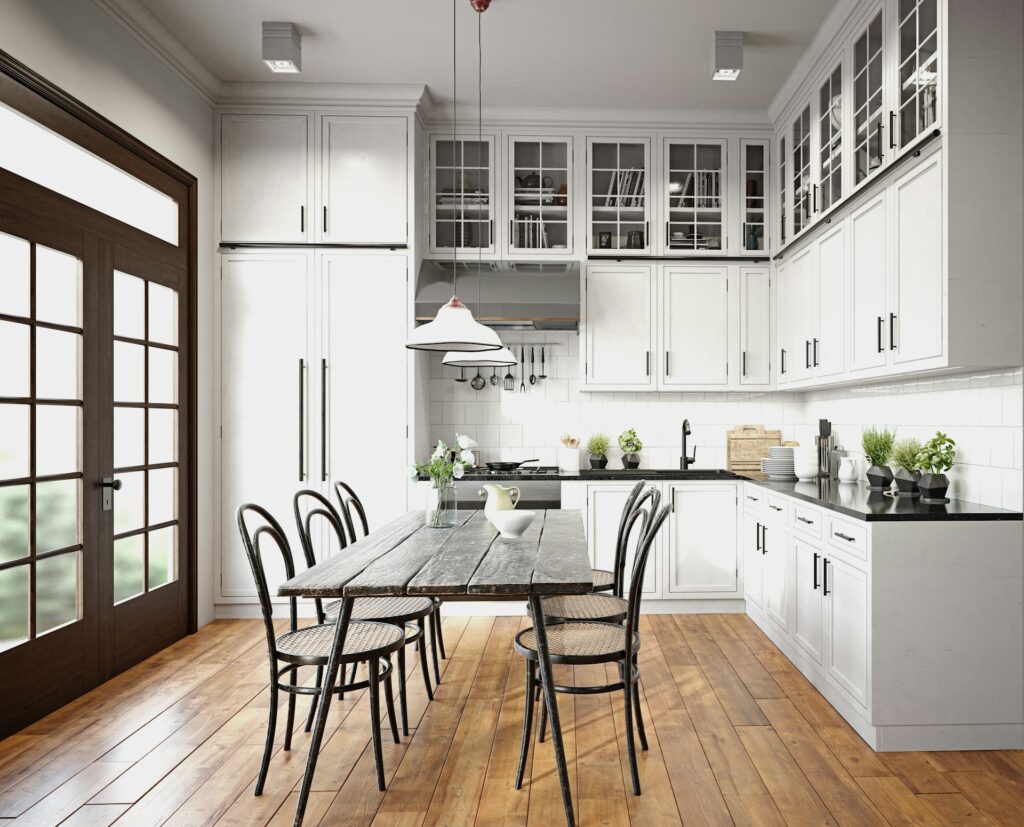
Cabinet molding is one of those finishing touches that might not get much attention at first, but it plays a big role in how a room looks and feels. It’s the trim that runs along the top, bottom, or sides of cabinets, shaping the way they meet the walls or ceilings. Without molding, cabinets can look a little plain or unfinished, no matter how nice the materials or colors might be.
Different rooms call for different cabinet molding styles. What works in a busy kitchen won’t always fit a quiet office or an often steamy bathroom. By choosing the right trim, we can tie cabinets into their surroundings, fix small visual gaps, and give everything a cleaner, smoother look.
Understanding the Purpose of Cabinet Molding
Cabinet molding isn’t just for looks. It does a few practical things too. For starters, it can hide spots where walls or ceilings aren’t perfectly even. It can also cover the spaces between the cabinet and ceiling or help cabinets feel like they truly belong in the room, instead of looking like pieces moved in later.
Here’s how it usually comes into play:
• At the top of cabinets to fill space between the cabinet and ceiling
• At the bottom to mask underlighting or complete the cabinet’s edge
• Around corners or edges where joints meet or need a finishing frame
What really makes molding stand out is how it creates a polished, built-in feel. Even when the design is simple, adding trim gives cabinets a finished shape and helps pull the room together.
Molding Styles That Work Best in Kitchens
Kitchens are one of the most common places to see cabinet molding. They’re high-traffic rooms, often filled with lots of angles, corners, and changes in height. That makes them the perfect spot for molding to help everything flow visually.
Two styles we often see in kitchens are:
• Crown molding, which tops tall cabinets and draws the eye upward
• Light rail molding, which fits underneath upper cabinets, especially when undercabinet lighting is used
These moldings do more than look good. They help frame out appliances, tile backsplashes, and open wall space so the room doesn’t feel choppy. Depending on the kitchen’s style, molding can be sleek with straight edges or more detailed with curves and grooves. For classic kitchens, raised or layered trim works well. For modern designs, thin, flat moldings tend to fit the cleaner look better.
It’s also worth thinking about how the finish and color of the molding match the cabinet tone. A slight contrast can make the molding pop. If you prefer a more blended feel, picking the same color will keep it subtle.
Monmouth Millwork custom manufactures a variety of cabinet molding options tailored to New Jersey homes, with each piece made for seamless integration and precise fit. The shop’s craftsmanship is supported by decades of experience in kitchen, bath, and storage solutions.
Picking the Right Look for Bathrooms and Laundry Rooms
Bathrooms and laundry rooms bring a different set of needs. These are smaller but hardworking spaces, and they often have higher moisture levels. That means we lean toward cabinet molding that stands up well in these conditions without being too bulky or overpowering.
In tight rooms, simpler styles can go a long way. Here are a few things we look for:
• Molding with soft edges to avoid sharp corners in close quarters
• Smooth profiles that are easy to clean and won’t trap steam or dust
• Low-profile designs to keep the room feeling open
We often skip heavy trim in these areas, especially in homes with low ceilings. Instead, a low curved crown or a shallow edge molding can add detail without overwhelming the space. In both bathrooms and laundry rooms, cabinet molding helps things feel more finished, even when we’re just adding storage above a washer or near a vanity.
All Monmouth Millwork cabinet trim selections are available in finishes and materials suitable for humid and high-use environments, allowing homeowners to keep every room looking refined and cohesive.
Choosing Molding for Living Rooms, Offices, and Other Spaces
Living rooms, offices, and hallways use cabinets differently. These are places where we might have built-in bookcases, wall units, or storage that needs to blend into the background. Cabinet molding in these rooms helps make cabinets feel more like furniture or part of the room’s original shape.
We often lean toward layered or stacked molding for these kinds of spaces, especially when we want a more traditional or formal look. Some helpful ideas include:
• Matching cabinet molding to the crown or baseboards already in the room
• Using thicker molding around bookcases to add weight and presence
• Mixing in one or two detailed trims to define shelves, doors, or edges
The goal here is balance. Too much molding can feel old-fashioned. Not enough can make it look unfinished. We usually start by looking at the rest of the room’s trim, like windows, door frames, or even wainscoting, then tie the cabinet molding into that style.
What to Think About When Selecting Styles for Different Rooms
Before deciding on a molding, we take a step back and look at the whole room. What’s the cabinet layout? How high are the ceilings? Are cabinets running into open hallways or corners? All these details help shape what kind of trim works best.
A few things worth paying attention to:
• Tall ceilings can handle thicker, more layered trim
• Short ceilings often need tighter moldings to keep things from feeling cramped
• Cabinets with glass doors might look better with thin or invisible trim
• Open floor plans should share the same trim details to stay consistent
Color matching plays a big part too. We try to keep molding tones in sync with wall trim and doors so the room doesn’t feel like a patchwork. Sometimes that means painting the molding the same color as the cabinet. Other times, it means using a natural wood tone that matches nearby beams or built-ins.
Details that Bring Lasting Style
Cabinet molding might be a small part at the end of a project, but it can shape the entire feel of a room. It finishes the edges, hides the gaps, and makes everyday spaces feel more cared for.
Each room in the home has its own layout and energy, and the right cabinet molding meets that tone without overdoing it. In a kitchen, it might bring cabinets to the ceiling. In a hallway, it might help storage fade into the wall. No matter where we use it, molding adds shape and structure in a way that’s both useful and good-looking.
At Monmouth Millwork, our team’s expertise extends across a full range of cabinetry and millwork styles, with decades spent customizing elegant solutions for rooms of every size and purpose in New Jersey homes.
When we pay attention to those details, rooms don’t just look more complete, they feel better to live in. Even a small trim detail can tip the scale from “almost done” to “just right.”
At Monmouth Millwork, we understand how the right trim can completely transform a space. We’re dedicated to helping homeowners across New Jersey discover finishing touches that match both their room and cabinet design. For inspiration and style-matching, our cabinet molding options provide a wide range of choices to bring your vision together. Whether you need to upgrade a quiet office nook or a busy kitchen, we’re here to help make every detail count. Call us today to discuss your next project.