
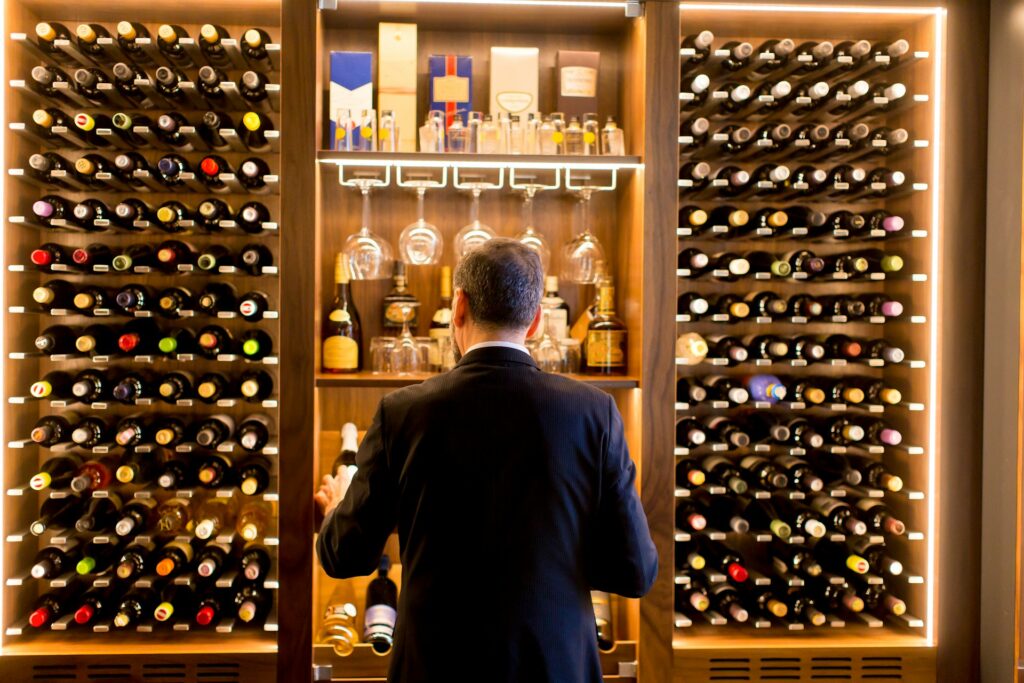
Wine racks do more than just hold bottles. If they’re not built right, bottles can roll, corks can dry out, or the entire rack can feel unstable. That’s why stability matters, especially in New Jersey homes where space, temperature, and room style all play a role. A well-made custom wine rack keeps bottles steady while matching the look and feel of the room it’s in.
We believe storage should fit both the wine and the space. A custom design isn’t just about making things look nicer, though it does that too. It’s about making the full setup work long-term. That stability comes from more than just where the bottles rest. It’s in the shape, the material, the layout, and how well it all fits within the room.
Why Bottle Position and Angle Matter
How a wine rack holds a bottle can change how well the wine stays preserved. Bottles need to rest at an angle that keeps the cork moist, which helps stop air from getting in. If wine sits straight up for too long, corks start to dry. That can affect the wine’s taste and quality.
• A tilted position, with the neck pointing slightly down, keeps wine touching the cork
• This angle helps slow down oxidation, keeping bottles sealed tightly
• Flat or fully horizontal racks work well for short-term storage or for screw-top bottles, which don’t need cork care
A custom wine rack allows us to design the angle based on the wine you plan to store. For some, a gentle tilt is better. For others, horizontal may be just fine. The key is keeping the bottle snug so it doesn’t slip or roll around. A sturdy bottle cradle helps with that, especially when the rack holds a mix of sizes or styles.
Custom racks often need to accommodate a range of bottle types, from traditional Bordeaux and Burgundy shapes to taller or shorter styles. Adjusting the angle and the support structure makes sure each type of bottle is properly supported. In crowded racks, a bottle that is loose or tilted the wrong way can lead to breakage, so attention to fit is crucial.
Material Strength and Rack Support
Not every material holds up over time, especially when weight is involved. Wine bottles are heavy, and a full rack adds up fast. That’s why material choice plays a big role in stability.
• Solid wood, metal, and strong composite materials offer better long-term support
• Frame thickness adds structure, helping stop sagging from heavy shelves
• Joints and connectors need to be tight and sturdy enough to handle day-to-day use
A custom rack lets us match structure to purpose. If you have magnums or oddly shaped bottles, standard racks don’t always cut it. Wider slots and reinforced shelves help keep everything in place. Keeping bottles from shifting around isn’t just about looks, it stops bumps, rattles, and wear over time.
Monmouth Millwork’s custom millwork craftsmen can accommodate a wide range of bottle sizes, wood species, and design details within one-of-a-kind wine racks. Built-to-order solutions mean each rack can be made to fit unique bottle collections and personal requirements.
Selecting finishes for a wine rack is more than a matter of style. The right protective finish prevents moisture damage and keeps wood from distorting over the years. For metal racks, powder coating or rust-resistant finishes increase durability and visual appeal. Each material offers specific advantages, and careful selection guarantees that the wine rack stays strong no matter where it’s installed in the home.
Air Flow and Temperature Spacing
Wine doesn’t like big temperature swings or stuffy, closed-in spaces. That’s why airflow matters. Even in homes where the wine isn’t in a fancy cellar, we can still make smart choices to keep things stable.
• Leaving space between bottles helps air move and prevents heat buildup
• Gaps around the shelves stop moisture from getting trapped
• Even small spots, like under stairs or sidewalls, can hold wine if the airflow’s right
In New Jersey winters, heat inside the house can rise fast, especially in tight areas. A wine rack that lets air pass between bottles helps maintain a more steady environment. It might seem like a small thing, but over time, it helps wine keep its quality.
Monmouth Millwork sources materials directly, and every custom rack is built using durable cabinetry techniques to ensure stability, smooth fit, and finish regardless of its location in the home.
Not only are gaps important for air movement, but the spacing also helps when you want to access a bottle quickly without bumping the surrounding bottles. Proper design ensures you can view the labels and pull out a bottle without disturbing the rest or causing accidental spills.
Designing for the Room, Not Just the Bottles
A rack that fits well in one home might not work in another. That’s why matching the space matters just as much as holding the wine. If the rack leans too far forward or sways under weight, it takes away from both safety and style.
• A custom layout follows the room’s shape, corner fits, wall heights, and side spacing
• Mounting racks to walls or building supports into cabinets helps keep them still
• Matching materials, colors, and finishes lets the rack blend into the home’s design
In some homes, this might mean building into a kitchen wall or setting up in a lower-level den. In others, it may be framing a single column that fits between two built-ins. Whatever the layout, a strong connection to the existing structure makes all the difference in how solid the rack feels.
We think function and style should work together. That means the rack looks like it belongs while doing its job well. When the design matches the rest of the house, it feels more natural, and it keeps the storage stable without stealing space.
Size is another aspect to keep in mind. Overly large racks can overwhelm a room and take up more floor or wall space than needed. Smaller, more compact racks might fit in a niche or between cabinets, but they should still hold enough bottles to avoid clutter elsewhere. Before installation, checking room dimensions and accounting for walking paths will help prevent the rack from becoming an obstacle.
Let Stability Support the Style
The best wine racks don’t call attention to themselves, they just work. But behind simple lines and quiet colors, there’s a lot going on. Everything from bottle angle to airflow plays a role in comfort, safety, and long-lasting design.
Stability isn’t about one thing. It’s the result of careful choices made throughout the full build. A custom wine rack gives room for those decisions. It lets storage and structure fit the space without compromise. And when the rack does its job, bottles stay safe, corks stay sealed, and the wine stays ready for whenever the moment calls.
Planning a storage upgrade that fits your space and style starts with the details that matter, how bottles rest, how air moves, and how each part supports the next. Whether your wine rack is a small accent or a standout feature in your room, we’re here to make sure it works for you all year long. For more inspiration and ideas around designing a custom wine rack for your New Jersey home, contact Monmouth Millwork.