
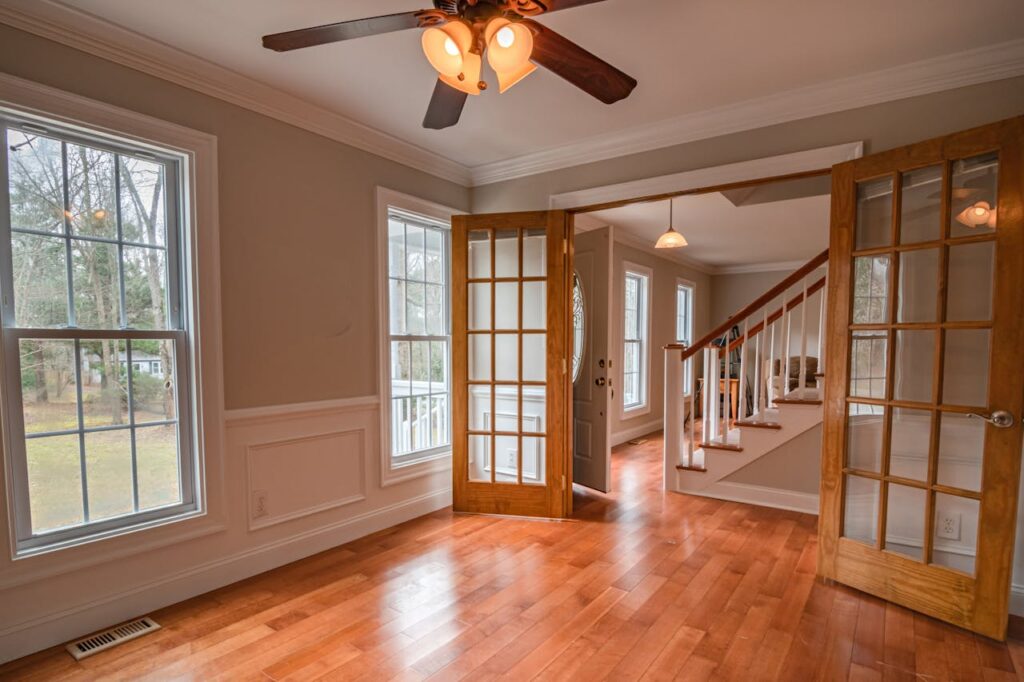
When picking out custom interior doors, one question pops up pretty often. Should they match the floor? The idea sounds simple, but the answer depends on a few things. Every home is a little different. Light changes from room to room. Floor finishes shift from hallway to living room. Then come things like furniture colors, trim, and even ceiling height.
Matching doors and floors can help a space feel calm and pulled together. Going with a contrast can make a door stand out or frame a part of the room in an interesting way. There’s no perfect answer that works for every layout. It really comes down to how we want the space to feel and what works best for the overall flow of the home.
Should Everything Match or Mix?
It’s easy to assume that doors and floors should match, but sometimes matching too closely can flatten the look of a space. When the floor and doors are nearly the same tone, the room can feel more blended. In the right space, that’s great. It creates a smooth transition and helps everything feel calm and connected.
But a little contrast can do a lot. A lighter door on a dark floor adds some lift and catches the eye. A deeper-toned door on a light floor can feel grounded and elegant, especially in hallways or near staircases. Either way, the key is thinking about how the whole room fits together, not just how the door looks against the floor.
Here’s how both options work in real homes:
• Matching tones help create a smooth, uniform feel that works well in open layouts.
• Contrasting tones highlight specific features and add dimension to smaller rooms.
• Mixed looks can be used to signal a change in space or activity, like a hallway leading into a den.
The best choice really depends on what look feels most natural in the space.
Rooms, Light, and Style Matter
Natural light and room size both influence how we see the color connection between doors and floors. In smaller or darker spaces, matching colors can sometimes make everything blend too much. The room may start to feel low or cramped.
Adding a lighter color door in that same space changes things. It reflects more light, which can help open the room up visually. It also catches the eye and helps shape the way we move through the room. In New Jersey homes, where rooms might see different amounts of light in spring compared to winter, small choices like this matter.
The opposite works too. A darker-toned door on light flooring can give the room contrast and direction. It can create a sense of movement between one area and the next.
Some quick examples:
• Light doors stand out nicely against deep walnut or stained oak floors.
• Darker doors can balance pale hardwood or washed finishes like white oak.
• Mid-tone doors work well when there’s strong sunlight, helping keep glare down.
Style preferences play a big role here too. Traditional homes in New Jersey may lean toward deeper stains and classic finishes. Brighter, modern spaces might call for soft contrasts or unique tones.
Look at What’s Around the Door
The floor is only one part of the picture. What’s around the door matters just as much. Trim color, wall paint, nearby cabinets, and furniture will all play into how the door feels in the space.
Let’s say the room has white trim and lighter walls. A stained wood door that matches the floor might blend everything together a little too much, making the room feel flat. On the flip side, a painted door in a soft gray or warm neutral might stand out while still looking like it belongs.
Door style makes a big difference too.
• Panel doors tend to look more traditional, especially in wood tones.
• Flush or flat doors often feel more modern and work well painted.
• Doors with glass inserts can break the visual weight between door and floor altogether.
Because custom interior doors come in more than just one shape or finish, they can act as a bridge between different design styles even if the color doesn’t match the floor. That flexibility is part of what keeps a room feeling balanced and complete.
Monmouth Millwork builds and installs custom interior doors in wood, paint-grade, composite, and glass options designed to fit new or existing frames in New Jersey homes. Homeowners can choose from a wide selection of wood species, panel designs, and finishes for a made-to-order result.
Think Long-Term, Not Just Trends
Design trends shift every few years, and while they can help spark ideas, we try not to follow them too closely when it comes to bigger choices like flooring and doors. What feels fresh now might feel dated later. That’s why we focus on what feels right for the homeowner’s style and the long-term layout of the home.
Some homes already use consistent flooring throughout, which may encourage more match-based choices for doors. Others have different floors in each room, like tile in the kitchen and stained wood in nearby areas. In those cases, consistency can be found through trim color or door style instead of matching stain.
The biggest thing to keep in mind with custom interior doors is that they open up more than just space. They offer the chance to match woodgrain, add contrast, or even mix styles. Since each one is designed to fit a specific room, we try to think about how it functions, what’s nearby, and how it might feel years from now.
Creating a Space That Feels Right
There’s no single rule that says interior doors have to match the floor. Some rooms feel best with blended wood tones. Others call for contrast. The goal is less about following a trend and more about noticing what the room is asking for: more light, more space, or more separation.
As spring approaches, now’s a good time to think about how light and finishes play together at different times of day. Whether a room needs warmth, brightness, or balance, the right door color and style can bring it closer to that feeling. All of it starts with noticing how doors and floors line up, and deciding which kind of match feels most like home.
Transform the look and feel of your home with the perfect door style and color. Details like the finish, shape, and placement can make a big difference in how inviting and cohesive your space feels. Our custom interior doors are made to fit your lifestyle and the unique needs of every room, whether you prefer a subtle design or something that makes a statement. Let Monmouth Millwork help you select a style that fits your New Jersey home. Contact us today to start planning your design.