

When we walk into a beautiful home here in New Jersey, it’s rarely the drywall or the subflooring that catches our eye. It’s the soul of the house: the custom moulding, the sweeping crown details, and the perfectly scaled baseboards. These elements, collectively known as millwork, are what turn a standard room into a masterpiece.
However, because custom millwork is so impactful, it’s also one of the easiest areas to get wrong. We’ve seen many homeowners and even experienced builders fall into the same traps, leading to delays, extra costs, and a finished look that just doesn't feel "right."
Whether you’re working on a coastal renovation in Monmouth County or a new build in the suburbs, avoiding these seven common mistakes will save you time and money. Here’s how we help you get it right the first time.
1. Relying on Vague Specifications and "Guesswork" Details
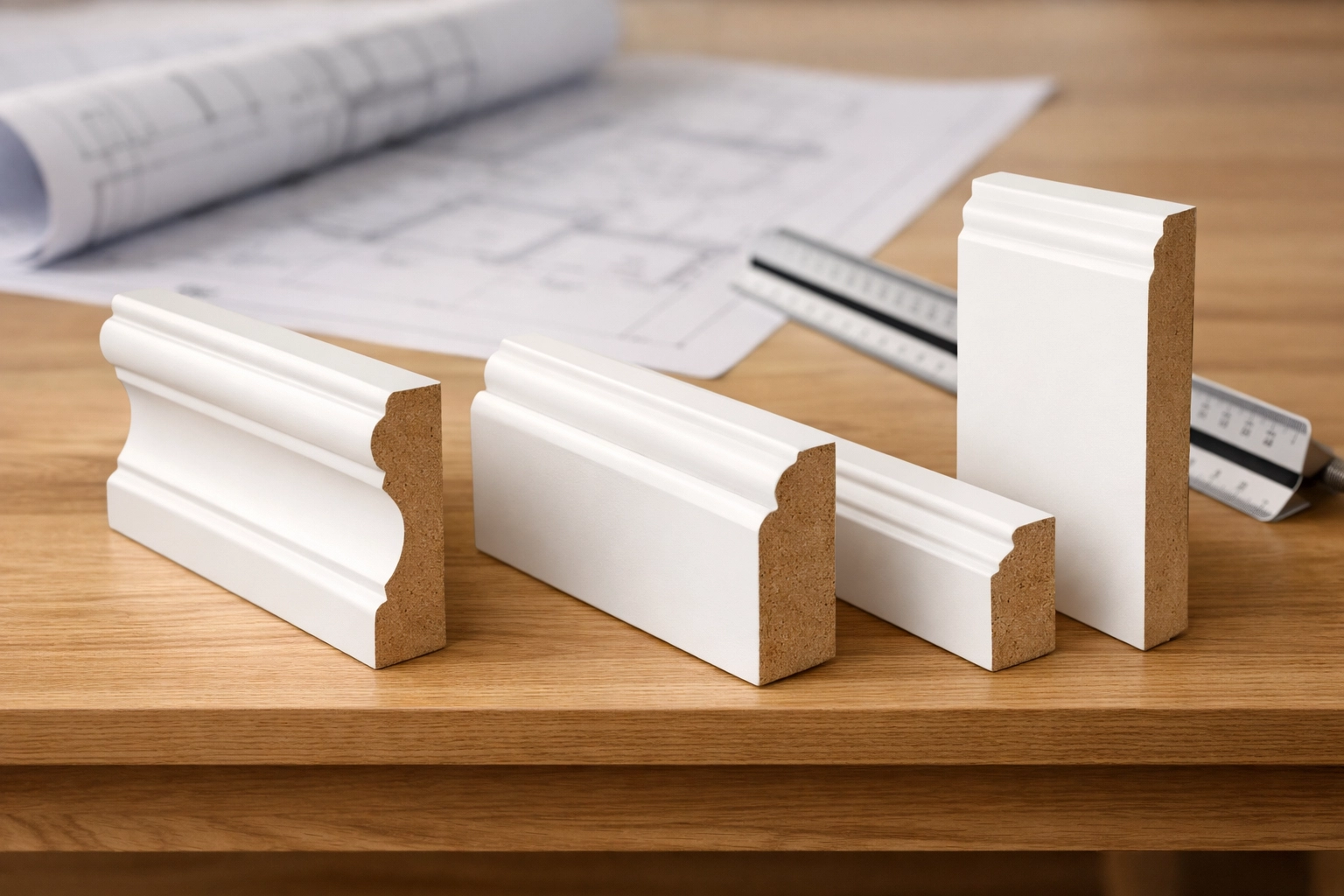
One of the most frequent issues we encounter is a set of architectural drawings that simply says "custom trim" or "crown moulding." While it looks okay on a 2D plan, it leaves far too much to the imagination. When details are vague, the fabricators or installers end up making their own assumptions. Their vision of "classic" might be very different from your vision of "luxury."
The Fix: We always recommend moving away from the guessing game by providing comprehensive depictions. This means using enlarged views and detailed sections that specify the exact depth and width of your millwork.
Instead of saying "crown," we suggest looking at specific profiles from our partners like Garden State Lumber. By selecting a specific profile number and size, everyone from the architect to the installer is on the same page. Providing these precise details ensures that the finished product looks exactly how you envisioned it.
2. Mixing Your Measurement Systems
It sounds like a small detail, but we’ve seen it cause massive headaches in the workshop. If your architectural plans use decimals, your field measurements use fractions (like 1/8th of an inch), and your door manufacturer uses millimeters, you’re asking for trouble. These tiny discrepancies compound, especially when you’re dealing with complex structures like custom wine rooms or intricate library shelving.
The Fix: Maintain total consistency across every single drawing and order. Pick one system: usually the standard fractional inch for most New Jersey projects: and stick to it.
When we work with clients at Monmouth Millwork, we make sure all material thicknesses and assembly clearances are documented in the same format. This reduces the risk of "rounding errors" that could leave you with a gap in your crown moulding or a door that won't quite shut.
3. Trusting the Blueprints Instead of the Field
This is a big one, especially in renovations. We love a good set of blueprints, but the reality is that walls are rarely perfectly plumb, and floor levels can shift. If you order expensive custom millwork based solely on the original architectural plans without verifying what’s actually happening on-site, you’re taking a huge risk.
The Fix: Always verify field measurements before placing a final order. This is a step we emphasize in our expert consultation services.
We recommend measuring from the actual framework once the studs are up and the rough openings are set. This is particularly important for custom doors and windows. Whether you’re ordering a stunning Simpson entry door or a set of Kolbe casement windows, knowing the exact "as-built" dimensions ensures a snug fit with no costly on-site modifications.
4. Picking the Wrong Material for Our New Jersey Climate
New Jersey weather is no joke. We deal with humid, sticky summers, freezing winters, and, for our friends along the shore, a lot of salt air. Using the wrong material: like a standard MDF for an exterior application or a wood species that expands too much with humidity: can lead to rot, warping, or peeling paint within just a few years.
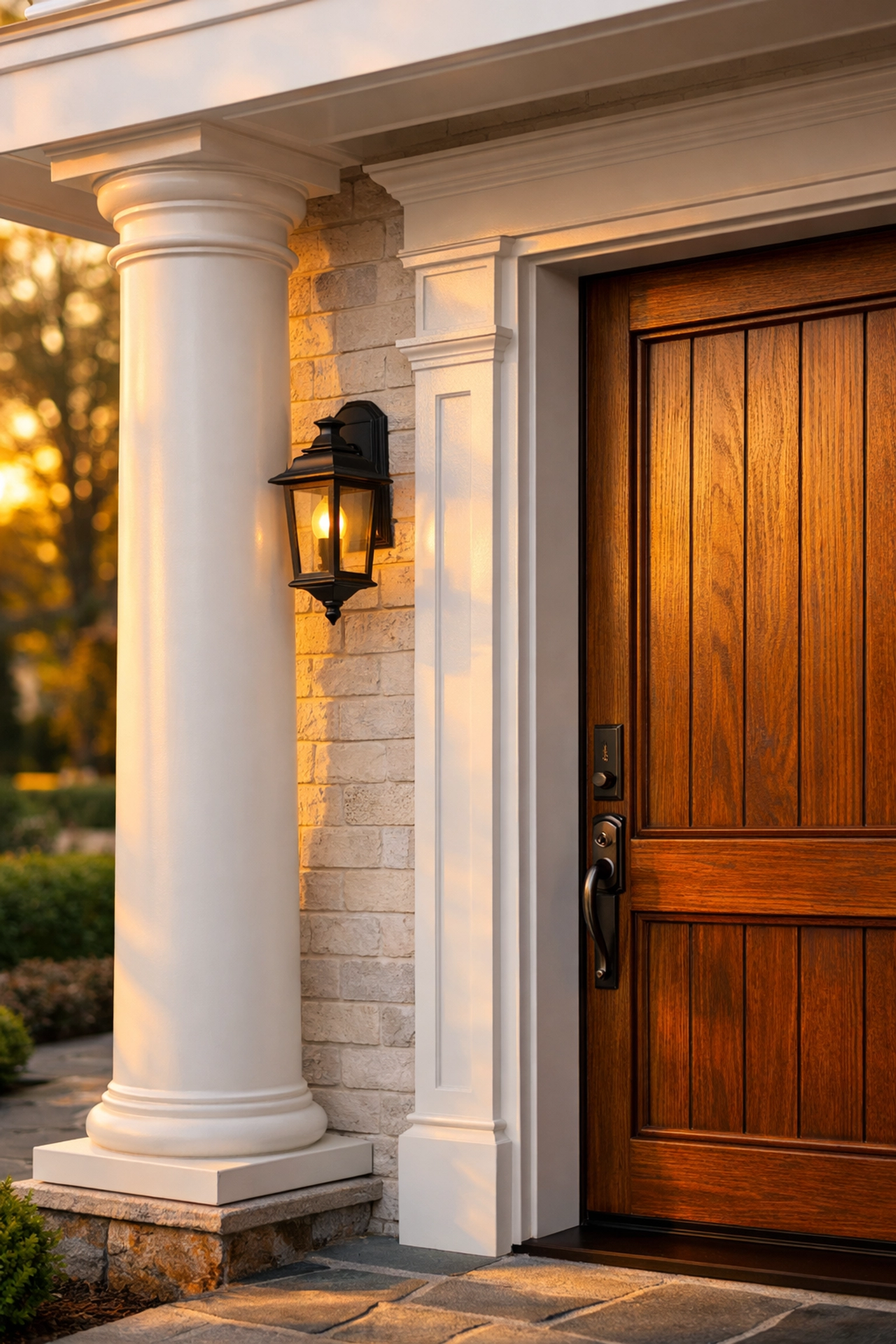
The Fix: You need to match your materials to the environment. For exterior millwork that needs to stand up to the elements, we are huge fans of NuCedar. It gives you the look of real cedar but with the durability of cellular PVC, meaning it won't rot or attract insects.
For interior projects, we guide you toward solid hardwoods or high-quality moisture-resistant options. By choosing materials suited for the local climate, your investment stays beautiful for decades, not just seasons.
5. Overlooking Building Codes and Safety Standards
Millwork isn't just about aesthetics; it has a job to do. A common mistake is falling in love with a design only to find out it doesn't meet local NJ building codes. For instance, you might want a specific custom interior door for a basement, but if it's near a furnace, it likely needs a specific fire rating. Or, you might choose a beautiful window for a bedroom that doesn't meet "egress" (emergency exit) requirements.
The Fix: Stay current with industry standards and work with a team that knows the local requirements. At Monmouth Millwork, we represent brands like Masonite, Reeb, and Therma-Tru, all of which offer a variety of fire-rated and code-compliant options.
When we help you select your custom doors or windows, we verify compliance during the ordering phase. This keeps your project on schedule and, most importantly, keeps your family safe.
6. Treating Hardware as an Afterthought
We often see people spend thousands on high-end moulding and millwork only to slap on "contractor grade" hardware at the very end. Not only does this diminish the luxury feel of the home, but it often leads to compatibility issues. If the door wasn't pre-prepped for the specific hardware you want, you’ll end up with messy on-site drilling.
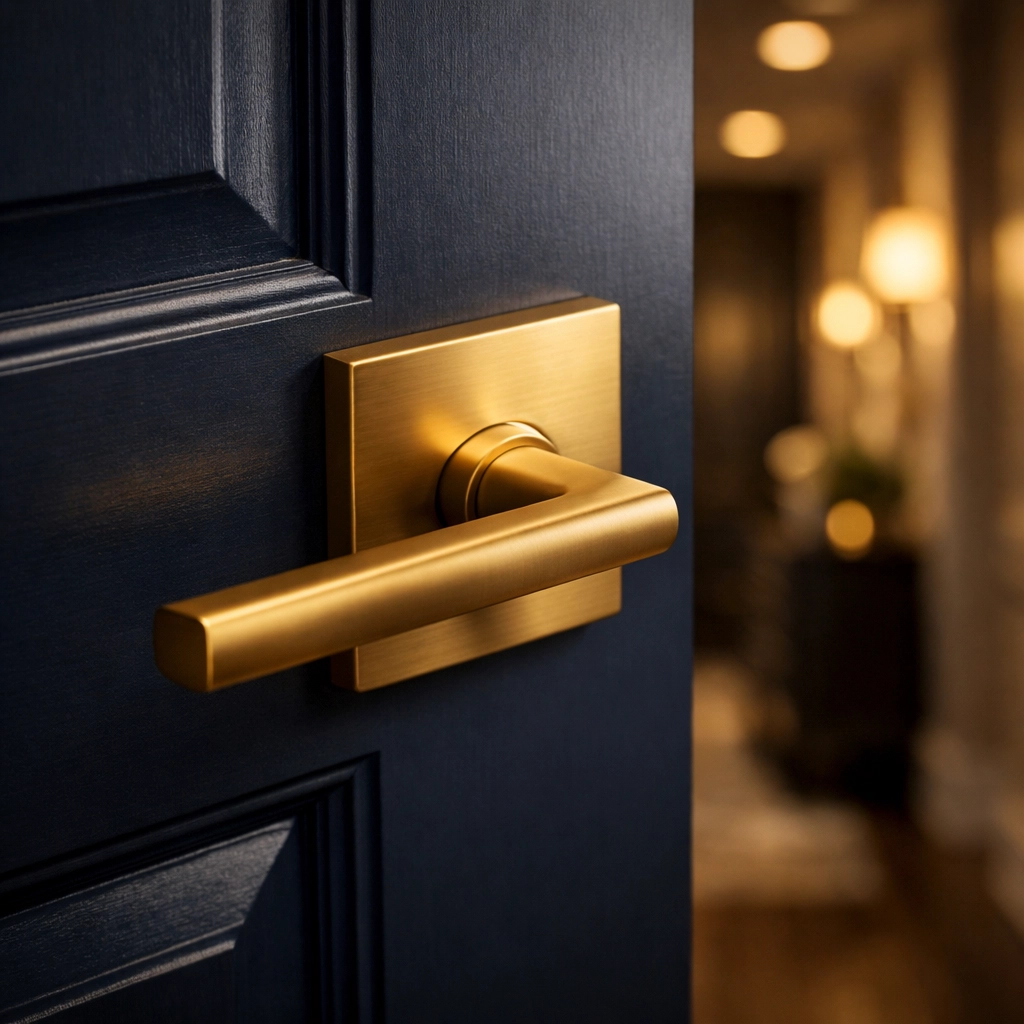
The Fix: Think of hardware as the "jewelry" of your home. We recommend selecting your hardware at the same time you choose your doors and trim.
By choosing luxury brands like Emtek, you get a level of craftsmanship that matches your custom millwork. We coordinate the hardware specifications with the door manufacturers (like Glenview or Upstate Doors) so that everything arrives pre-prepped and ready to install. This results in a much cleaner finish and a smoother installation process.
7. Neglecting the Installation Plan
The most beautiful millwork in the world can be ruined by a poor installation. If no one plans how the pieces will be attached, or in what order they should be installed, you end up with visible nail holes, mismatched seams, and unsightly gaps.
The Fix: Plan the installation process from day one. This means thinking about attachment methods: will it be glued, nailed, or use a hidden fastening system?
For complex projects like specialized wine rooms, the sequencing is everything. We provide clear guidance and work closely with your builders to ensure the installation goes smoothly. Our goal is to make sure the final result looks like a seamless part of the architecture, not something that was just tacked on at the end.
Why Manufacturer-Direct Makes a Difference
At Monmouth Millwork, we do things a little differently. As a leading broker of manufacturer-direct building materials, we don’t just sell you a product; we provide a design-led solution.
Because we work directly with brands like Sierra Pacific, Kolbe, and Garden State Lumber, we can offer professional-grade products at pricing that makes sense for your budget. We’re here to help you navigate these seven mistakes and ensure your NJ home is as beautiful as you’ve always imagined.
If you’re ready to start your next project or just want to browse some inspiration, check out our image gallery or reach out to us for a consultation. We’d love to help you bring your vision to life with the perfect millwork and moulding.
Let's make sure your next project is a success( without the common mistakes!)