
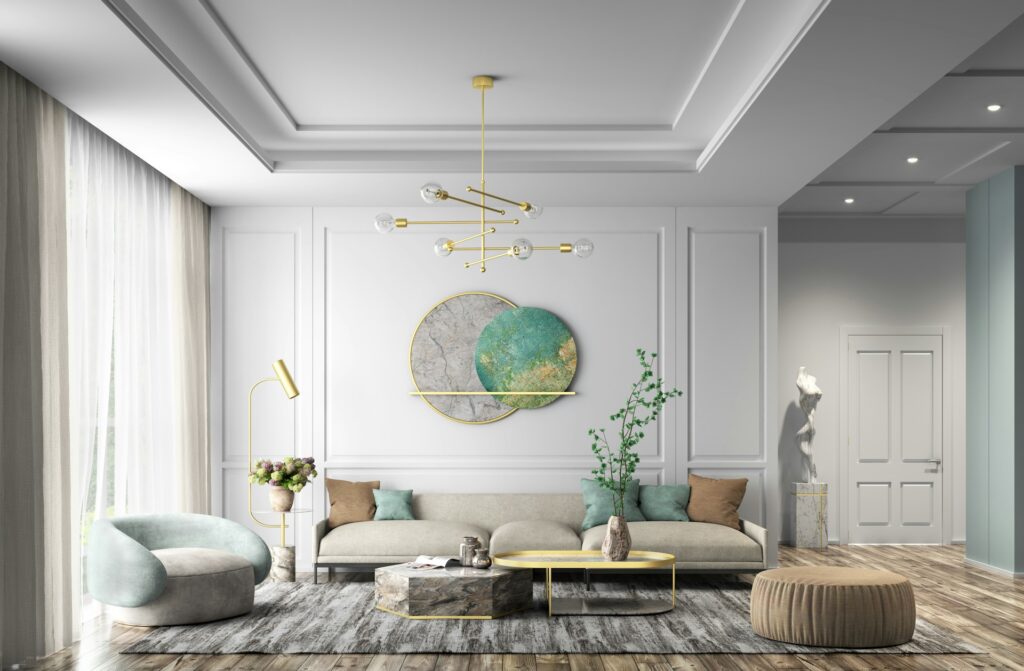
Open concept homes are full of possibilities, but they can feel unfinished without the right finishing touches. One small detail can help shape the space in a big way: a crown mold ceiling. It does not add walls or block views, but it helps guide your eye and give some order to large, open rooms. When done right, crown molding works like a quiet frame for everything going on down below.
In homes where the kitchen flows right into the living room or where dining areas feel tucked into one corner, this kind of trim can add just enough structure. It keeps things smooth while adding a little style up high. We have seen how a well-placed line along the ceiling can pull things together and help spaces feel more connected.
Creating Visual Zones in Shared Spaces
Open layouts often blend several rooms into one big area, which can sometimes make things feel a little too open. With no walls to signal where one space ends and the next begins, adding trim is one way to help shape the room.
- A crown mold ceiling helps show where one space leads to another without putting up barriers
- Living rooms feel more grounded when their trim does not stretch into the dining area beside them
- Kitchens benefit from trim that highlights the ceiling shape without blocking the light or movement
Instead of drawing hard lines, moldings can shape softer zones. It is a way to help a big area feel livable, especially when ceilings are high. In New Jersey homes, where many floor plans allow for connected kitchen and living areas, adding molding brings back some of the structure those homes used to have. It also softens where spaces shift in height, which can be common in older homes that were later opened up.
Monmouth Millwork crafts custom crown moldings, transition cornices, and ceiling trim, measured to fit open concept rooms and match ceiling angles or heights. Our wood and composite profiles coordinate with other trim features for seamless transitions between flowing spaces in your New Jersey home.
Connecting Ceiling Features Across Rooms
Sometimes, a crown molding line is even better when it continues from one room to the next. In homes with long stretches of ceiling and few built-in breaks, this connection can help the trim work as one clear feature.
- Keeping the same height and profile from kitchen to breakfast area works best when the ceiling flows naturally
- Matching angles and joints where walls turn can keep sightlines clean
- Big, open ceilings often feel more complete when the trim carries across rooms, especially if those rooms do not have clear borders
That does not mean the trim needs to be identical in every space. Sometimes we adjust the height or details as the ceiling shape changes. What matters is a smooth transition. With open layouts, every line people see should feel like it belongs. That is what helps the space feel finished without relying on lots of decorations or bulky furniture.
Highlighting Natural Focus Points
Even in an open space, certain features naturally grab attention. Fireplaces, built-ins, or lighting fixtures often create the main visual anchor in a room. Trim around the ceiling can guide the eye toward these spots and hold that focus.
- A simple molding line can help frame a fireplace so it feels like it is at the center of the room
- Ceiling trim balances large windows that might feel off-center
- Adding trim above built-ins gives them a final edge and ties them into the ceiling
We have found that in homes with high windows or vaulted spaces, ceilings can actually make focus points harder to spot. Clear lines up top bring shape down into the room without taking away from that open feel. It is an easy way to let cozy corners or standout walls hold their own without clutter.
Monmouth Millwork can mill crown moldings to suit visual anchor points, offering curved and custom projection options to fit around architectural details and feature walls. We work with clients to coordinate these trims with lighting, cabinetry, or accent walls for a unified effect in open rooms.
Avoiding Overuse in Wide or Vaulted Areas
It is easy to go too far with crown molding, especially when rooms are large or ceilings stretch up high. In big spaces, using trim the same way across every wall can make things feel heavy or crowded.
- For vaulted ceilings, molding works better on the lower flat sections
- In wide rooms, we adjust depth and height so the trim does not feel oversized
- When beams or lighting are already features, trim should support, not compete
We aim to use crown molding where it feels natural, not where it just fills space. If the ceiling is simple and does not have other details, trim can work well across the top edges. But if there are already strong lines from beams, skylights, or pendant lights, the crown molding should be a quiet partner. That way, the room keeps its open feeling without becoming too busy.
Blending with Seasonal Natural Light
In spring, the light shifts. Days get longer, windows let in more sun, and indoor light feels warmer. Ceiling lines start to stand out, especially with early morning or late afternoon light hitting them at an angle. Trim helps shape that light and pick it up in natural ways.
- Ceilings catch more attention when the light gets brighter, making trim more noticeable
- Painted crown molding can pull soft shadows across the top of the wall
- Early spring is a good time to update trim since the weather usually allows for better indoor work
By this time of year in New Jersey, the clutter of winter is mostly gone, and natural light has more room to move. That means it is easier to see where trim helps or hurts. Adding that final feature along the ceiling makes the most sense when the light will actually bring it to life.
Trim done in the spring gets to settle before humid summer days roll in, and it fits better with other seasonal updates like wall paint or window changes.
When Rooms Feel Balanced from the Top Down
Open layouts can feel lively, but they also need a little structure to feel comfortable. A crown mold ceiling gives spaces some order from the top down without closing them off.
We have seen how trim creates zones, guides the eye, balances focus points, and pulls features together. When chosen and placed with care, crown molding adds just enough polish without making things feel tight or overdone.
By taking our time to line things up across open spaces, watch for how the light shifts through the seasons, and use the right kind of trim in the right places, we help rooms feel both open and complete. That kind of balance is what makes a whole home feel more lived-in and whole, even without any walls getting in the way.
Adding the right finishing details up top can transform an open layout and bring balance to your space without altering your floor plan. A thoughtfully placed crown mold ceiling is one way we create trim options that naturally suit each room, especially in New Jersey homes where light and layout can differ from one neighborhood to the next. At Monmouth Millwork, we custom build each element to fit the unique flow and feel of your home. Reach out to us to discuss which solutions might work best for your project.