
Choosing windows, doors, and millwork can shape how our homes look, feel, and perform for years. Here in New Jersey, we also need to account for changing seasons, coastal weather, older home layouts, and the wide range of architectural styles found across the state.
Whether we are updating a Shore home, restoring a Colonial, building a new home, or planning a commercial project, the best results come from treating these materials as part of one coordinated design. This guide explains what to consider when choosing custom doors, exterior doors, windows, fire-rated assemblies, and premium millwork.
1. We begin with the project’s priorities
The right building materials should solve practical problems while supporting the design we want. Before comparing brands or finishes, we recommend identifying the most important outcomes for the project.
Consider whether we need:
- Better comfort during New Jersey winters and summers
- Improved security at exterior entry points
- More natural light in dark rooms
- Easier cleaning and ventilation
- A custom fit for an unusual opening
- Architectural details that make the home feel complete
- Materials that require less maintenance
For example, a homeowner replacing drafty windows may prioritize insulated glass and proper installation. A builder designing a new entry may focus on size, sightlines, lead times, hardware, and how the door coordinates with the home’s exterior trim.
Starting with these goals helps us avoid getting overwhelmed by hundreds of unrelated options.
2. Custom doors should fit both the opening and the architecture
When we search for custom doors in New Jersey, we are usually looking for more than an attractive slab. We need a complete door solution that fits the opening, complements the architecture, and performs reliably through changing weather.
Custom doors NJ homeowners and builders choose may include:
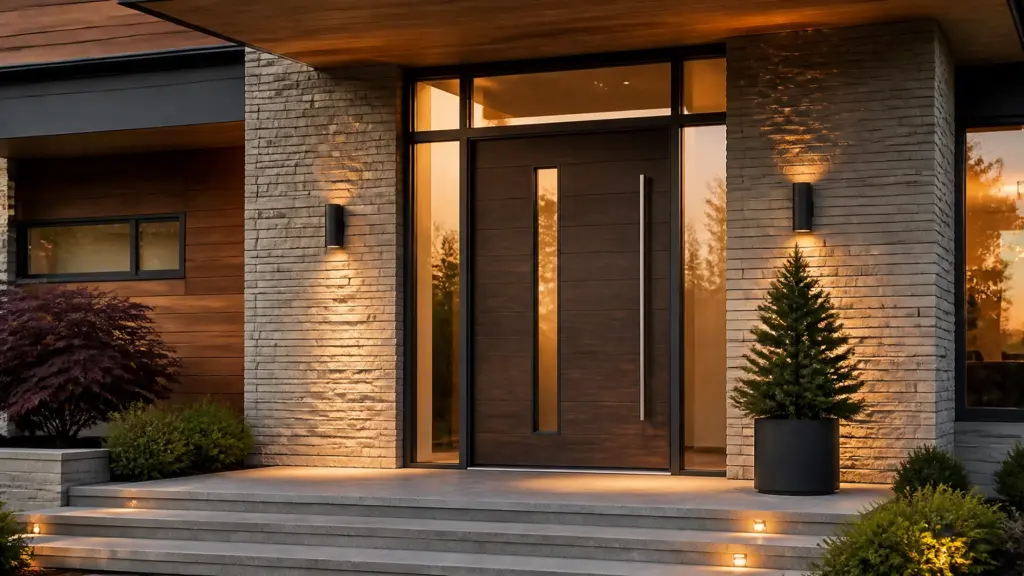
- Oversized pivot doors for contemporary homes
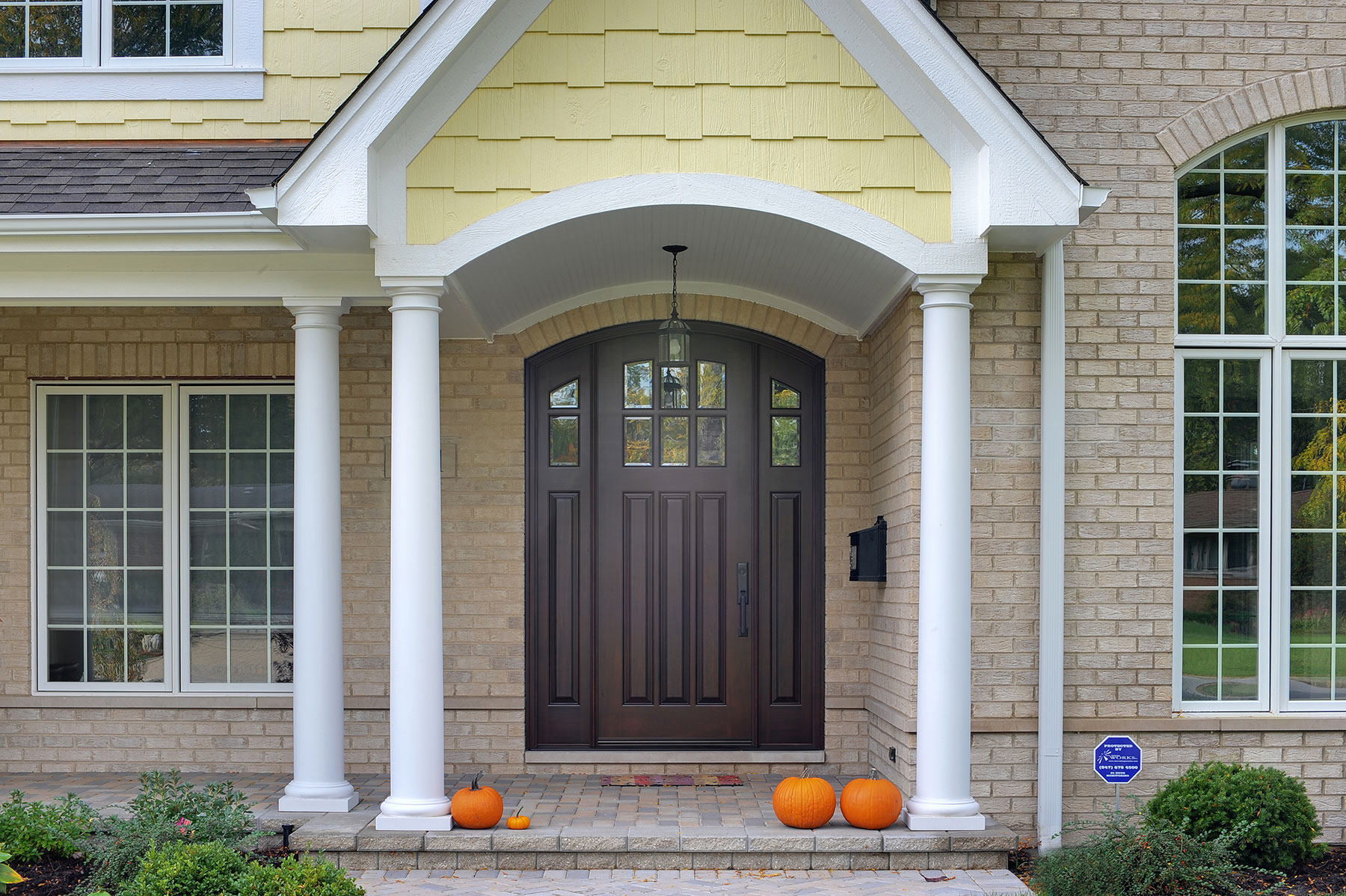
- Mahogany or oak entry doors for traditional properties
- Double doors with decorative glass
- French doors with full-height glass panels
- Doors with matching sidelites and transoms
- Dutch doors for cottages and coastal homes
- Modern doors with flush panels and long vertical pulls
For instance, a traditional New Jersey Colonial may look best with a paneled wood door, divided-light sidelites, and coordinated casing. A modern renovation may call for an oversized pivot door with a clean finish and minimal hardware.
The most important step is confirming the rough opening, swing, jamb depth, threshold, and surrounding trim before ordering. A custom design only works well when the entire assembly is planned together.
3. Exterior doors should balance beauty, security, and energy performance
Our exterior doors do several jobs at once. They welcome guests, protect the home, reduce drafts, and help define curb appeal. That is why choosing exterior doors in NJ requires more thought than selecting a color from a catalog.
We can compare several common materials:
- Wood: Offers natural warmth, substantial construction, and extensive customization. It may require more routine maintenance, especially in exposed locations.
- Fiberglass: Provides a durable, low-maintenance option that can replicate the appearance of wood.
- Steel: Offers strength and impact resistance, making it a practical choice when security is a leading concern.
- Aluminum-clad systems: Combine a refined interior appearance with a protective exterior surface.
Glass selection matters, too. Clear glass can brighten an entry, while frosted, reeded, or textured glass can provide privacy without sacrificing daylight. Sidelites and transoms can also make a smaller foyer feel larger.
We should also look closely at the frame, weatherstripping, threshold, lockset, and installation method. Even a high-quality door may perform poorly if the frame is out of square or the surrounding opening is not properly sealed.
4. Fire-rated exterior doors require a complete, tested assembly
Fire-rated exterior doors are often discussed as though the door alone carries the rating. In practice, the door, frame, hardware, glazing, closer, and installation details may all need to work together as a listed assembly.
In residential projects, fire-rated doors may be required between an attached garage and living space or in certain multifamily, townhouse, commercial, or mixed-use applications. The exact requirements depend on the adopted building code, the location of the opening, and the direction of the fire separation.
Before purchasing, we should confirm:
- The required fire-resistance rating
- Whether the frame and hardware must be labeled
- Whether glazing is permitted
- Whether a self-closing or self-latching device is required
- Which components are approved for the specific assembly
We should never modify a rated door by adding an unapproved glass panel, changing hardware, or enlarging an opening without confirming that the rating remains valid. For New Jersey builders and homeowners, we recommend coordinating with the architect, building department, or fire official before finalizing the order.
A fire-rated door can still support an attractive design. We can choose finishes, hardware, and trim that coordinate with the rest of the project while meeting the required safety standards.
5. Purchasing new windows starts with comfort and performance
When we are purchasing new windows, we should look beyond appearance and compare the performance information attached to each product. New Jersey homes face cold winters, humid summers, wind, rain, and, in coastal areas, salt air.
Important considerations include:
- Frame material and durability
- Insulated glass configuration
- Low-emissivity glass
- U-factor for insulation
- Solar Heat Gain Coefficient, or SHGC
- Air leakage and water resistance
- Ease of operation and cleaning
- Installation method and warranty requirements
The ENERGY STAR window and door guidance and the NFRC rating system are useful starting points. We can use the labels to compare products based on tested performance rather than relying only on marketing descriptions.
Installation deserves equal attention. Proper flashing, air sealing, sill preparation, and insulation around the opening help the window deliver the comfort we expected. At Monmouth Millwork, our installation services include replacement and installation of windows, doors, and millwork.

6. Double hung vs single hung windows depends on how we use the room
The question of double hung vs single hung windows comes up often in New Jersey renovations and new construction. Both styles can provide reliable performance, but they operate differently.
With a single-hung window, the lower sash moves while the upper sash remains fixed. This design is often simple, practical, and cost-conscious. It can work well in rooms where we mainly need ventilation through the lower portion of the opening.
With a double-hung window, both the upper and lower sashes move. We can open the top, bottom, or both sections, which gives us more flexibility for airflow. Many double-hung windows also tilt inward, making upper-story cleaning easier.
We may prefer double-hung windows when:
- We want more control over ventilation
- We are replacing windows on a second floor
- Interior cleaning access matters
- We want a classic appearance for a Colonial or traditional home
We may prefer single-hung windows when:
- We want a straightforward operating design
- The budget requires a simpler configuration
- The upper sash does not need to open
- We are matching existing windows with fixed upper sections
The style itself does not determine energy efficiency. We should compare the specific product’s U-factor, SHGC, air leakage, glass package, and installation details.
For a broader selection, we can review Monmouth Millwork’s window offerings and compare styles based on the room, elevation, and overall project goals.
7. Premium millwork connects every detail
Premium millwork gives a home continuity. When door casing, window trim, baseboards, crown molding, and built-in details share compatible profiles and finishes, the entire interior feels more intentional.
Millwork can include:
- Window and door casing
- Baseboards and crown molding
- Wainscoting and wall paneling
- Decorative pilasters and entry surrounds
- Custom built-ins
- Architectural columns and trim
- Coordinated hardware and finish details
For example, a new front door may look disconnected if the surrounding casing is too narrow or does not match the home’s existing proportions. Adding a deeper casing, a transom surround, or simple pilasters can make the entry feel like part of the original architecture.
We can also use modern millwork in older New Jersey homes. Clean-lined baseboards and simple wall paneling can update a space without erasing its character. Garden State Lumber and Modern Mill are examples of product resources available through Monmouth Millwork.
8. Premium brands give us more flexibility
A manufacturer-direct broker can help us compare products from several premium manufacturers instead of limiting the project to one catalog. Monmouth Millwork works with brands such as Kolbe, Sierra Pacific, Simpson, Glenview, Therma-Tru, Emtek, Garden State Lumber, and others.
Each brand may serve a different purpose. For example, Kolbe offers high-performance windows and doors with options for composite construction, aluminum-clad exteriors, wood interiors, and expansive glass. Glenview Doors offers modern, transitional, and classic exterior doors with custom solutions and European-inspired construction.
This broader selection is useful when we need to balance:
- Historic character and modern performance
- Custom sizing and project timing
- Budget and long-term value
- Energy efficiency and visual impact
- Door, window, and hardware coordination
Rather than visiting several door stores in NJ and comparing disconnected products, we can organize the selections around the home’s design and performance needs.
9. A consultation makes the process easier
Searching online for a door store New Jersey homeowners trust: or comparing door stores in NJ: can provide ideas, but product selection is only one part of the process. We also need accurate measurements, compatible components, realistic lead times, and a clear installation plan.
A design consultation can help us answer questions such as:
- Should the front door swing in or out?
- Will sidelites fit the existing opening?
- Is the opening suitable for a pivot door?
- Which window operation works best for each room?
- Does the project require a fire-rated assembly?
- Which trim profile matches the home?
- How will the new products be flashed, sealed, and finished?
Monmouth Millwork provides design consultation, manufacturer-direct sourcing, installation, repairs, and post-sales support for homeowners, builders, architects, and designers throughout New Jersey. Our projects page offers additional examples of coordinated window, door, and millwork solutions.
10. We choose materials as part of one complete system
The best results come when we coordinate windows, doors, hardware, and millwork from the beginning. A front door should relate to the windows. The window casing should work with the baseboards. Hardware finishes should support the overall design instead of appearing as an afterthought.
Whether we are comparing front doors in New Jersey, planning exterior doors NJ homeowners can rely on, or deciding between double-hung and single-hung windows, we can make better choices by focusing on the full project.
At Monmouth Millwork, we help simplify that process with premium building materials, design-focused guidance, manufacturer-direct pricing, and professional installation. When we are ready to discuss a renovation, new build, or replacement project, we can contact our New Jersey team to begin with a conversation about the home, the opening, and the result we want to achieve.