
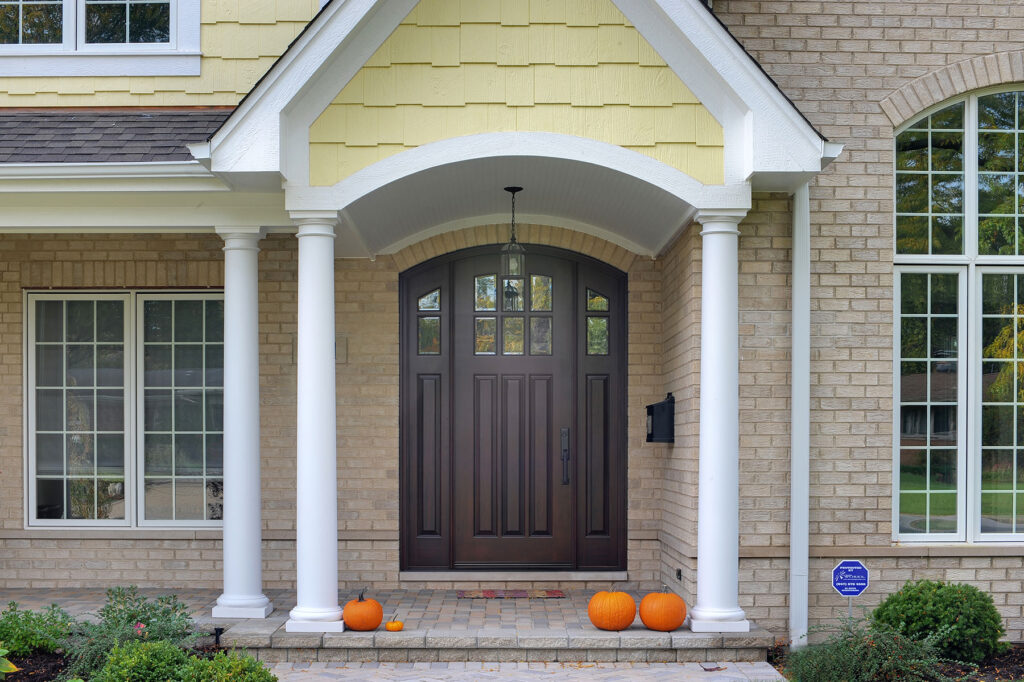
Buying premium building materials in New Jersey should not mean paying for options we do not need or settling for products that do not fit our home. Whether we are replacing a front entry, purchasing new windows, or selecting trim and stair parts for a larger project, the smartest approach is to understand what affects cost and where expert guidance can save us time and money.
At Monmouth Millwork, we help homeowners, builders, architects, designers, and contractors compare manufacturer-direct options for doors, windows, and millwork. Here is how we can buy well without overpaying.
1. Choose the right buying path before comparing prices
The supplier we choose affects more than the product price. It also affects how clearly we understand our options, whether the product fits the opening, and how much support we receive after the order.
A big-box store may work well for a standard, in-stock door or window size. We may find basic fiberglass doors, replacement windows, and common trim profiles at a convenient price. However, we may have fewer choices for custom sizing, architectural details, premium glass, specialty finishes, and coordinated installation.
A specialty door store in New Jersey or one of the many door stores in NJ may offer more design choices. The challenge is that we still need to compare product construction, glass packages, installation details, warranties, and lead times from one provider to another.
A manufacturer-direct broker gives us another option. Instead of representing only one product line, a broker can compare several manufacturers and help us identify where an upgrade creates real value. At Monmouth Millwork, we work with premium brands such as Kolbe, Sierra Pacific, Simpson Doors, and Glenview.
The goal is not always to find the lowest initial number. Our goal is to find the right combination of design, performance, installation, and long-term value.
2. Understand what actually drives the cost
Two doors that look similar in a showroom can have very different prices. When we understand the main cost drivers, we can decide where to spend and where to simplify.
-
Size and configuration
A standard single door usually costs less than a large custom entry system. Adding sidelights, a transom, wider stiles, oversized panels, or a double-door configuration increases material and manufacturing costs.
For example, a six-foot-wide entry with two glass sidelights requires more framing, glass, hardware, and installation work than a standard three-foot door.
-
Material
Wood offers natural character, custom profiles, and a wide range of stain and paint options. It can be an excellent choice for traditional front doors in New Jersey, but it may require more maintenance than other materials.
Fiberglass can provide a lower-maintenance alternative and may replicate the look of painted or stained wood. Steel often offers strength and value, especially when security and durability are priorities.
-
Glass package
Decorative glass, laminated glass, privacy glass, impact-resistant glass, and insulated glass can all affect the price. On windows, double-pane and triple-pane glass, Low-E coatings, and gas fills influence both cost and energy performance.
-
Fire rating
A fire-rated assembly costs more because the door, frame, hardware, and installation must work together to meet testing requirements. We should never assume that a standard door can simply be upgraded with a fire-rated lock or closer.
-
Finish and hardware
Custom stains, factory paint, specialty colors, multipoint locks, premium handles, hinges, closers, and electronic access systems can add to the total. These details may be worthwhile on a visible front entry but unnecessary on a low-traffic utility door.
-
Installation and site conditions
Installation costs depend on the opening, wall condition, access, flashing, trim, disposal, and whether we are replacing an existing unit or creating a new opening. A low product price does not represent a true bargain if the installation leaves gaps, water-management problems, or unfinished trim.

3. Choose custom exterior doors for the way we use the home
When we compare custom doors New Jersey homeowners can order, we should start with performance and daily use rather than appearance alone. A beautiful door still needs to open smoothly, seal properly, handle New Jersey weather, and coordinate with the surrounding architecture.
For exterior doors NJ projects, we should consider:
- Wood doors: Best for natural grain, custom profiles, traditional homes, and distinctive entry designs. We should discuss weather exposure, finish maintenance, and overhang protection.
- Fiberglass doors: A practical choice when we want the appearance of wood with less routine maintenance. Fiberglass works well for many replacement and new-construction applications.
- Steel doors: Often selected for strength, security, and value. Steel may be appropriate for service entrances, utility areas, and projects where durability is the primary concern.
- Entry systems: A complete system may include the slab, frame, threshold, weatherstripping, sidelights, transom, hardware, and exterior casing. Treating these parts as one coordinated design can improve both appearance and performance.
For example, a traditional New Jersey home may suit a stained wood door with divided-light sidelights and substantial casing. A contemporary home may look better with a flush fiberglass or wood door, narrow vertical glass, and simple trim.
We can review additional options through Monmouth Millwork’s door collections, including specialty and custom configurations.
4. Know when fire-rated exterior doors are necessary
Not every exterior entrance needs a fire rating. In New Jersey, the requirement usually depends on the wall assembly, occupancy, location, and approved building plans.
In a single-family home, a rated door may be required where an opening is part of a code-required separation, such as certain attached-garage conditions. In a multifamily or commercial building, requirements may apply to doors serving corridors, stair enclosures, smoke barriers, fire partitions, fire barriers, or exterior walls with limited fire separation distance.
A building’s main exterior entrance is not automatically a fire-rated door simply because it serves multiple occupants. We should confirm the requirement with the architect, construction official, or fire official before ordering. The New Jersey building code resources and IBC fire and smoke protection provisions provide useful background.
When we do need fire-rated exterior doors, we should verify:
- The required rating, such as 20, 45, 60, or 90 minutes.
- The door’s tested and labeled assembly.
- Compatibility between the slab, frame, hinges, closer, lock, and glazing.
- Self-closing and self-latching requirements where applicable.
- Installation by a qualified professional.
The rating belongs to the complete tested assembly, not just the door slab. This is one area where professional guidance can prevent an expensive ordering mistake.
5. Compare windows by performance, not just operating style
When we are purchasing new windows, appearance and operation matter, but the glass package and installation often have a greater effect on comfort.
New Jersey experiences cold winters, humid summers, coastal exposure, and significant temperature swings. We should compare the window’s NFRC-rated U-factor, which measures insulation, and Solar Heat Gain Coefficient, which measures how much solar heat passes through the glass.
Useful features may include:
- Insulated double-pane or triple-pane glass
- Low-E coatings selected for the home’s exposure
- Argon or krypton gas fills
- Durable weatherstripping
- Thermally efficient frame materials
- Proper flashing and air sealing during installation
Because New Jersey spans more than one ENERGY STAR climate zone, we should use the ENERGY STAR climate zone finder rather than relying on a generic recommendation.
Double hung vs single hung windows
The difference between double hung vs single hung windows is straightforward:
- A single-hung window has one moving sash, usually the bottom sash.
- A double-hung window has two moving sashes, allowing us to open the top and bottom.
Double-hung windows can provide more flexible ventilation. We can open the lower sash to bring in air and the upper sash to release warm air. Many also tilt inward, making upper-floor cleaning easier.
Single-hung windows typically have fewer moving parts and may cost less. They can be a sensible choice for ground-floor rooms, lower-use spaces, or projects where we want to direct more of the budget toward better glass or upgraded finishes.
Neither style automatically guarantees better energy performance. A well-built, properly installed single-hung window can outperform a poorly installed double-hung window. We should compare the entire product and installation package.
6. Coordinate premium millwork with doors and windows
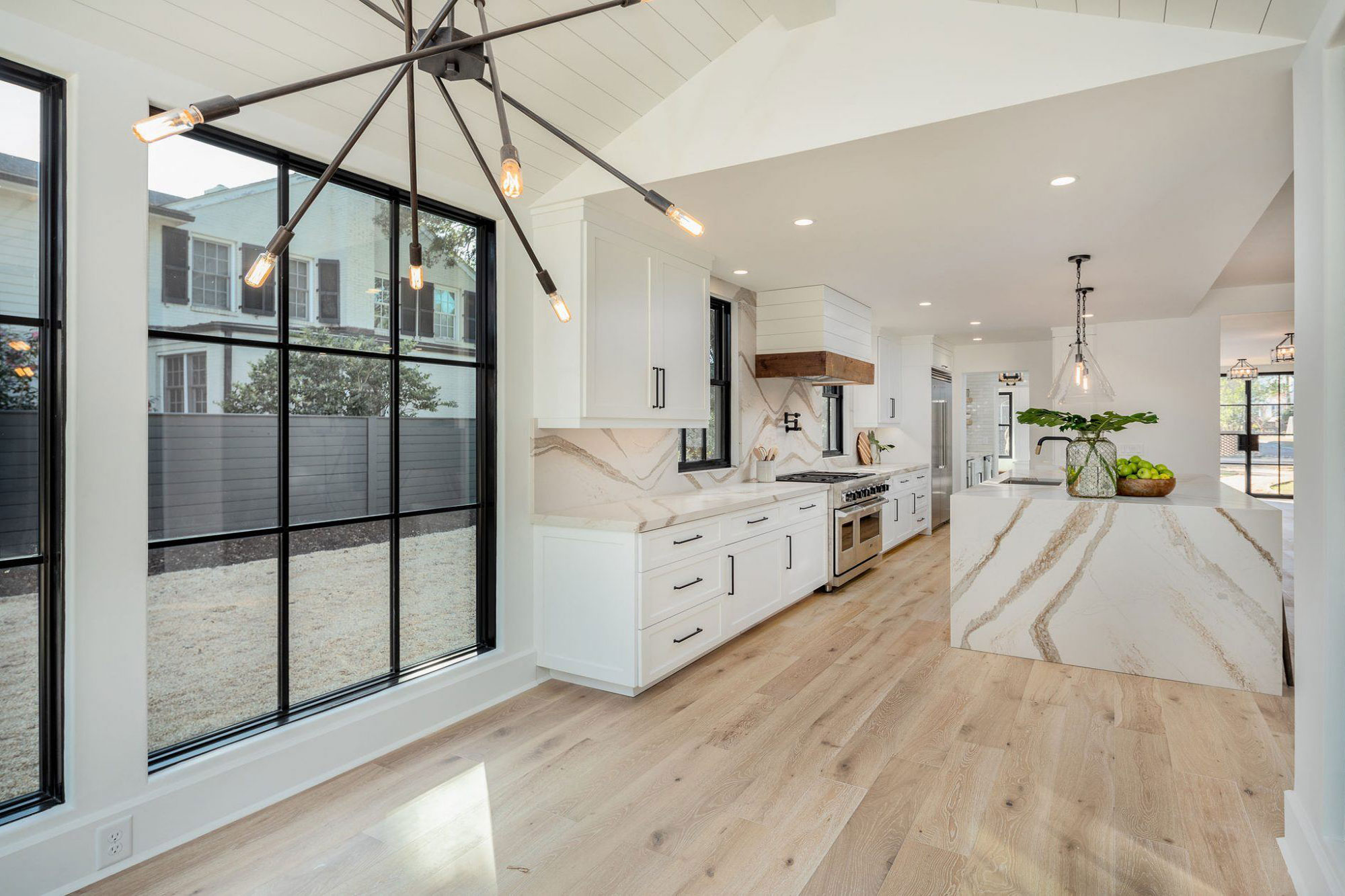
Premium millwork should make the entire project feel intentional. If we install a beautiful entry door but use undersized or mismatched casing, the result may not look complete.
For residential and commercial projects, millwork may include:
- Interior and exterior casing
- Baseboards and crown molding
- Window stools and aprons
- Wainscoting and wall paneling
- Stair treads, risers, newels, and handrails
- Custom entry surrounds
- Built-ins and architectural trim
For example, a replacement window project may also require new interior casing because the existing trim no longer fits the opening. A custom front door may need a matching surround, transom trim, or wider casing to suit the home’s proportions.
We can explore millwork solutions and coordinate profiles, species, finishes, and dimensions with the window and door package.
7. Request a complete quote before making a decision
A useful quote should make it easy for us to compare options. We should ask each supplier to show:
- Product brand, series, size, and configuration.
- Door material, window frame material, or millwork species.
- Glass type, Low-E coating, gas fill, and performance ratings.
- Finish, hardware, screens, grilles, and accessories.
- Fire rating and compatible frame or hardware, if required.
- Delivery, installation, trim work, disposal, and cleanup.
- Warranty coverage and post-sales service.
Manufacturer-direct pricing can help us compare these details across multiple premium brands without paying unnecessary layers of markup. It also gives us a clearer way to decide whether an upgrade (such as triple-pane glass, a better finish, or custom casing) will provide meaningful value.
At Monmouth Millwork, our design consultation and white-glove service continue from the first conversation through installation and post-sales support. We review each detail as if it were our own project, whether we are helping with one front door or coordinating a complete window, door, and millwork package.
8. Buy for long-term value, not just the lowest price
The smartest purchase balances appearance, performance, maintenance, installation, and budget. We may save money by choosing a simpler door configuration, using single-hung windows in selected rooms, or reserving full custom millwork for the most visible areas.
At the same time, we should not cut costs on proper sizing, weatherproofing, fire-rated assemblies, or installation. Those details affect comfort, safety, energy use, and the life of the project.
Whether we are researching doors in NJ, planning a whole-home renovation, or specifying materials for a new commercial project, professional guidance can make the process easier. We can contact Monmouth Millwork to compare custom doors, energy-efficient windows, premium millwork, and manufacturer-direct options for our New Jersey project.