

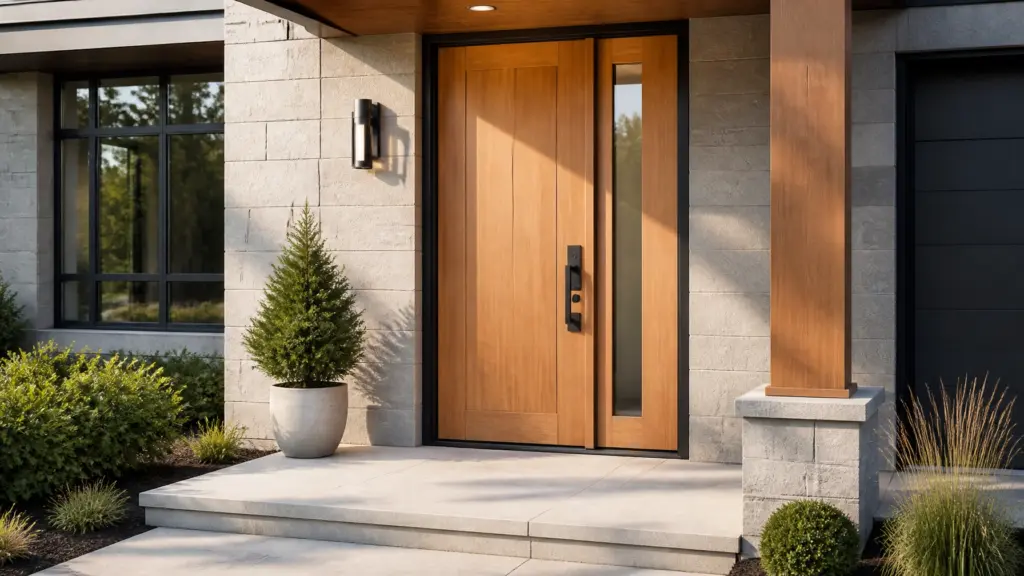
When we help homeowners, builders, and designers choose exterior doors, safety is always part of the conversation. We also know that safety should not mean giving up the style, warmth, or architectural character we want from a front entryway.
That is where fire-rated exterior doors can make a meaningful difference. They are designed for specific openings where fire protection matters, such as an attached garage-to-house connection or an exterior wall that requires a rated assembly. With the right materials, glazing, hardware, and installation, we can create an entry that supports safety while still feeling personal and beautifully finished.
1. A fire-rated door protects more than an opening
A standard exterior door may provide weather protection, security, insulation, and curb appeal. A fire-rated exterior door adds another level of tested performance: it is part of a labeled assembly designed to help slow the spread of fire for a specified period.
The rating is usually expressed in minutes or hours. For example, a door may have a 20-minute, 45-minute, or 90-minute fire-protection rating. The correct rating depends on the wall, opening, building type, and local code requirements.
We also distinguish between two terms:
- Fire-resistance rating: Usually applies to a wall, floor, or other building assembly.
- Fire-protection rating: Usually applies to an opening protective, such as a door assembly.
This difference matters because a fire-rated door is not simply a heavy door with a fire-resistant material inside. The door, frame, hinges, hardware, glazing, and closing system may all need to work together as a tested and labeled assembly.
For that reason, we never recommend assuming that any steel, fiberglass, or wood door is automatically fire-rated. We help confirm the product listing and coordinate the details with the project requirements.

2. The garage-to-house connection is a key place to consider fire protection
For many New Jersey homeowners, the most common fire-rated door question involves the door between an attached garage and the home.
An attached garage can contain vehicles, fuel, tools, lawn equipment, electrical equipment, and other materials that may increase fire risk. A properly protected door helps separate that space from the living areas and provides an important layer of protection for the household.
In many one- and two-family residential applications, the opening between the garage and dwelling may be protected by one of the following approaches, depending on the applicable code edition and local interpretation:
- A solid wood door of the required thickness.
- A solid or honeycomb-core steel door of the required thickness.
- A listed door assembly with a minimum fire-protection rating, commonly 20 minutes in this type of application.
A self-closing device may also be required so the door returns to the closed position after use. We pay attention to this detail because a fire-rated door cannot provide its intended protection if it is regularly left open or does not close correctly.
During a renovation or new construction project, we encourage homeowners and contractors to discuss the garage-to-house opening early. We can review the size, swing, frame, threshold, hardware, and finish so the door works safely and looks like a natural part of the home.
3. Steel and fiberglass provide strong, stylish options
The best material for a fire-rated exterior door depends on the opening, design goals, performance needs, and approved product options. We commonly discuss steel, fiberglass, and wood-based solutions with our customers.
Steel doors offer strength and a modern appearance. A steel exterior door can provide a clean, streamlined look with matte black, bronze, or brushed metal hardware. We can also pair steel with narrow glass panels, contemporary sidelights, and simple architectural lines where the complete assembly is listed for that configuration.
Fiberglass doors offer durability and design flexibility. Fiberglass resists many common issues such as dents, moisture exposure, and warping. It can also provide a convincing wood-look finish, making it an attractive option for a front entry or side entrance where we want the warmth of wood with less maintenance.
Wood and wood-look finishes add character. Traditional homes may call for a painted or stained door with raised panels, divided lites, or decorative detailing. When a fire-rated assembly is required, we confirm that the selected configuration meets the applicable listing rather than treating appearance as a substitute for performance.
The important point is that the material alone does not determine whether a door is fire-rated. The complete, tested assembly does.
4. Decorative glass can work when it is part of the approved assembly
Many homeowners want glass in a front door because it brings in daylight, improves visibility, and creates a more welcoming entrance. We often hear the same concern: “Can we have decorative glass and still meet fire-safety requirements?”
Sometimes the answer is yes, but the glass must be part of the listed fire-rated door assembly. Regular decorative glass cannot simply be installed in a fire-rated door after purchase. Doing so may void the door’s rating and create a code issue.
Depending on the listing, options may include:
- Small decorative glass lites.
- Narrow vertical glass panels.
- Factory-integrated fire-rated glazing.
- Wired or specially tested fire-rated glass.
- Limited glass areas that comply with the assembly’s requirements.
We review the glass size, frame, glazing material, and installation details together. This helps us avoid a common mistake: choosing a door based on a beautiful glass design and discovering later that the configuration is not approved for the required opening.
For a front door that does not require a fire rating, homeowners generally have more freedom with glass styles. We can explore frosted, textured, clear, privacy, or divided-light options while also considering energy performance and security.

5. New Jersey code requirements depend on the location and project
Not every exterior door in New Jersey needs to be fire-rated. A typical front door, rear door, or side entry may not require a fire rating unless it is located in a fire-resistance-rated wall or near a property line where exterior wall protection applies.
The requirements can change based on:
- The distance between the exterior wall and a property line.
- Whether the home is detached, attached, or part of a townhouse.
- Whether the door connects a garage to the dwelling.
- The building’s occupancy and construction type.
- Whether the project is new construction, an addition, or a renovation.
- The applicable New Jersey code edition and local amendments.
For general reference, we recommend reviewing the state’s adopted construction requirements and discussing the project with the local construction official. Resources such as the New Jersey fire and smoke protection provisions and exterior wall provisions can help explain the larger code framework, but they should not replace project-specific guidance from the authority having jurisdiction.
We can support the product-selection side of that process. Builders, architects, and contractors can bring us the plans or opening requirements, and we can help identify appropriate manufacturer-direct options before the order is finalized.
6. Door upgrades often go hand in hand with window improvements
When we talk with homeowners about purchasing new windows and upgrading exterior doors, we often look at the entire entry elevation rather than treating each opening separately.
For example, a new front door may look best when paired with:
- Matching sidelights.
- A transom window.
- Energy-efficient windows in the foyer.
- Coordinated exterior colors.
- Consistent hardware finishes.
- Improved weather seals and insulated frames.
Window style also affects the way an entry feels. Homeowners sometimes ask about double hung vs single hung windows when updating a porch, foyer, or nearby room. Double-hung windows allow both the upper and lower sashes to move, while single-hung windows typically keep the upper sash fixed. We can help compare ventilation, cleaning access, proportions, and energy-performance needs as part of the broader upgrade.
Our Kolbe windows and doors and other premium window collections give us the flexibility to coordinate performance and appearance across the project. We also offer window solutions for new construction and replacement work.
7. Premium style and safety can belong in the same design
A fire-rated exterior door does not have to look institutional or industrial. We can help create a refined entry using details such as:
- A fiberglass door with a realistic stained wood finish.
- A steel door with slim profiles and modern hardware.
- A factory-integrated decorative glass panel.
- A deep charcoal, bronze, or black finish.
- Simple flush panels for a contemporary home.
- Traditional raised panels for a coastal or Colonial-style property.
As a manufacturer-direct broker, Monmouth Millwork gives customers access to premium brands including Kolbe, Sierra Pacific, Simpson Doors, and Glenview, along with other carefully selected manufacturers. Our role is to reduce the guesswork around custom doors in New Jersey, whether we are helping with a front entry, garage-to-house connection, replacement door, or a more complex architectural opening.
We serve homeowners searching for custom doors NJ, builders planning new construction, architects specifying doors in NJ, and designers looking for a reliable door store in New Jersey. Instead of sorting through endless door stores in NJ without knowing which products fit the project, we help narrow the choices based on safety, style, performance, budget, and installation needs.
8. The right guidance makes the process easier
Choosing a fire-rated exterior door involves more than selecting a color and handle. We need to understand the opening, confirm the required rating, review glazing options, coordinate the frame and hardware, and make sure the installation supports the product’s performance.
At Monmouth Millwork, we provide expert consultation, manufacturer-direct pricing, and white-glove service from the first conversation through installation and post-sales support. We review each detail as if it were part of our own home or project.
If you are comparing front doors New Jersey homeowners can rely on, planning a garage renovation, or beginning a custom exterior door project, we would be glad to help. Visit our exterior doors in New Jersey or contact us to schedule a consultation. You can also visit our showroom at 3535 State Route 66 Parkway 100, Building 4, Neptune, NJ to see premium doors, windows, and millwork in person.
With the right guidance, we can create an exterior door that brings together safety, lasting performance, and the style we want to see every time we come home.

One Response